Thursday, September 6, 2007

Pardon The Interruption


If you've been wondering about new entries on this blog, wonder no longer. After a month's hiatus, I'm back, blogging from a new perspective. I have taken a job at a public charter high school on the west side of Detroit and reentered the classroom full time after four years of doing professional development work, mostly with elementary and middle school math teachers. As you might imagine, if feels both strange and strangely familiar to be back. Unlike my two previous full-time positions in K-12, where I taught at an alternative high school with students whose average math and literacy level was between 4th and 5th grade, and at a middle college where I basically spent one or more semesters with students trying to get themselves in a position to pass an intermediate algebra course at the community college that sponsored our charter and physically hosted our school, this time around I've got one group of sophomores for Algebra 1, three classes of seniors for Algebra II, and one class of seniors for precalculus.

The first day was deceptive, to say the least. Fewer than half the students showed up for school, if attendance in my classes was typical, and things went remarkably smoothly. I think it was the first time I ended the first day of classes feeling calm, cool, and ready for whatever the year had to offer (as opposed to wanting to crawl into bed before my head exploded). I thought perhaps the real students were being cleverly hidden away while a group imported from Cass Tech or some other magnet school had been brought over to heighten my false sense of security. Well, maybe not Cass Tech: in going over an SAT-type problem about combined rates of work, I discovered that many if not all of my students, or at least all of those who were willing to venture an opinion, believed that 1 1/3 was between 1 1/2 and 2. Perhaps not shocking from freshmen, but from 10th and 12th graders? From 12th graders enrolled in precalculus? What was I getting into? But since behavior was decent, I was optimistic that much could be accomplished.

Day 2 made clear that the honeymoon, if not over, was clearly not fated to last through Monday. Indeed, with two of my classes, it was pretty much time to seek couples counseling, individual therapy, and a good divorce lawyer. While I had been told that the maximum enrollment in my classes would be 30 (which frankly is more than I've EVER had in a class I taught in K12 alone), by today there were at least two classes that had 30+. With most of those enrolled showing up today, it was hot (no windows in my room), humid, and too often annoyingly loud. And me without my earplugs, my whip, or my teddy bear. :(

So my challenge here will likely be for much of the ensuing year to explore my teaching experiences with you, time and brain allowing. We'll see how it goes for as long as it seems productive to do so. Feel free to come along for any or all parts of the ride.

Sunday, August 5, 2007

An Interesting Conversation


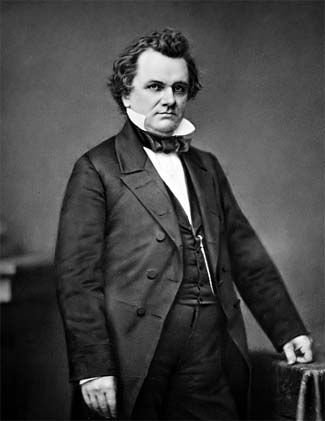
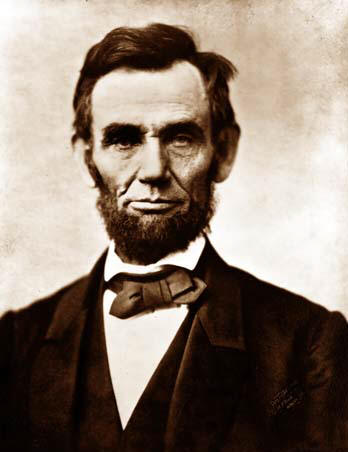
While not quite the Lincoln-Douglas debates, over the last several days, an old argument has been resurrected on math-teach@mathforum.org. Those not recently conversant with that long-standing free-for-all list likely don't know that after a decade or so as the wild west of mathematics education lists, where anything went and often did, in spades, the list owners have stepped in to bring peace, harmony, and bliss to this particular battleground in the Math Wars. Thus, the lion now lies down with the lamb, all is civility, no epithets are hurled, no ad hominem attacks launched, and decorum is the order of the day.

And yet, intriguing undertones, sometime imported from more venerable and genteel locations such as NOTICES of the AMS, 54(2007), pp 822-3

There, one may find an exchange between Jerry Rosen, a founding member of Mathematically Correct and a Cal State Northridge mathematician and Sol Garfunkel of COMAP regarding old questions about who is to blame for the alleged contemporary crisis in US K-12 mathematics education. Professor Rosen wrote:

NSF-Sponsored Educational Programs
In his Opinion article “Because Math Matters”, Solomon Garfunkel outlines true problems but draws wrong conclusions. His statement “We are not doing a very good job. U.S. students are falling behind students in most industrialized countries” is true, but his claim that the NSF [National Science Foundation] has “led the effort for innovation in mathematics education since the 1950s” is loaded as well as overtly political (something he claims we should avoid). I am not sure what the NSF was doing in the 1950s and 1960s with respect to math education, but it has been quite involved since the 1980s and in mostly bad ways. Look at some of the results of NSF programs’ de-emphasis on arithmetic calculation and algebraic manipulation and the (NCTM-encouraged [National Council of Teachers of Mathematics]) substitution of calculator usage for long division. Implicit in his analysis and many such writings is the opinion that teaching children strong computational skills is bad. But the example given is the poor performance of U.S. students. However, this poor performance has taken place during the NSF’s most innovative period, i.e, from the 1980s to the present. This is why the backlash against fuzzy math on the part of parents has been so extreme; during this time U.S. children have plummeted in math. A good example to study would be the New York City public school system and the CUNY [City University of New York] college system. It is acknowledged that in the 1940s–1960s the CUNY colleges produced more scientists (including mathematicians) and doctors (and various professionals) than any other college system. Furthermore, many of these people came from the working and middle classes. Doesn’t this need to be analyzed? I went through the NYC public school system and CUNY in the 1960s and 1970s, and many of my classmates ended up in highly successful professions. However, there were bad things, one of which was tracking minorities into programs where they were denied traditional approaches to education. One of the dubious achievements of reform movements of the 1980s and 1990s was that basic arithmetic competence was denied to minorities as well as to the white working and middle class children. Let me summarize: The U.S. became a world leader in mathematics between the 1940s and the 1960s. In fact, many of the countries that are beating us now sent thousands of their future scientists (and still do) to be educated in the U.S. Since the 1980s, concomitant with the rise in “innovative” teaching techniques, the U.S. has declined considerably in international comparisons. Garfunkel is wrong in saying this isn’t political; it is most definitely political. In fact, the NSF needs to immediately stop funding all education initiatives and start subjecting future education grant proposals to the same rigorous standards they use for mathematical/scientific research.


Sol Garfunkel replied:

Reply to Rosen


Rosen misstates the actual time frame for reform funding and as a consequence misplaces the blame for poor performance. The NCTM Standards were published in 1989. They were universally endorsed by all of the major mathematical professional societies. The Standards were in fact undertaken because of apervasive sense that we were doing an inadequate job of educating students in mathematics at the K–12 level. NSF funding of reform efforts began in the early 1990s, and the major reform curricula did not appear until the mid- to late-1990s. And at their height (there has been some drawback of high school programs since the math wars) the elementary, middle, and high school curricula achieved no more market share than 25%, 20%, and 5% respectively. It is clearly inappropriate to blame poor performance in the 1980s and 1990s on these innovative curricula. The inconvenient truth is that there were no good old days, just a lot of hard work left to be done.

Math-Teach Gets Involved

Lou Talman, a mathematician from Metropolitan State University in Denver posted a link to the above to math-teach under the subject "More Nonsense From Jerry Rosen, and Solomon Garfunkel's Reply"

After that, Wayne Bishop, another Cal State (LA) mathematician wrote:

"Jerry's letter strikes me as being spot on.. Could you be more specific as to what you consider to be nonsense?"

Lou Talman replied: "Sol Garfunkel explained it pretty well, Wayne. Do you disagree with Garfunkel?"

I posted, independently:


As Sol Garfunkel accurately states, Jerry Rosen's dates are badly
amiss, for starters.

As for the rest of the claims Jerry makes, they appear to be a very
unscientific attack on something he personally dislikes, grounded on
his n = 1 experiences as a student, and then adding 2 + 2 to get 5
regarding who and what is primarily to blame for underperforming
inner city students in the 1980s and 1990s. Any argument that pins
the blame on NSF/NCTM ideas and programs is badly flawed given the
reality of when the programs appeared, as well as their penetration
into the market. Moreover, their penetration in NYC in particular was
not very great until about 2004, and then only at the elementary
level. Jerry knows this. So does anyone paying attention.

Finally, it's unclear at best that anyone is "beating us"; the
educational sky has been falling in the United States, according to
one or more critics, since about 1845. During the ensuing century and
3/4, we went from a backwater to the most powerful nation in the
history of the world. I'm sure that lots of nations wish their skies
were falling in the same ways ours have been. While no one seriously
disputes that there's room for improvement in the quality of
mathematics education in this country, there's still a lot of debate
about where and how that improvement needs to be.

So what don't you consider to be nonsense about Jerry's letter?


Jerry Rosen replies to my post
I cc'd the above to Jerry Rosen, since he had not be a participant on math-teach for many years. He responded as follows:


Let me see if I can explain this as simply as possible:

The CUNY system had produced more doctors, lawyers and scientists than any other system in the country from 1940's -1970's and this is a system with a mostly middle and working class student body. Anyone intent on doing educational research, not pushing some agenda, would want to understand what was good about the the NY public school system and what wasn't. The rebellions of the 60's lead to open admissions in CUNY in the 70's (I went to Brooklyn College during the start of open admissions - anyone with a HS diploma could go). The CUNY colleges became moer integrated (obviously a good thing), but many of of the inner city minority graduates were not properly educated. I was involved with tutoring in the CUNY system and many of these
open admissions students couldn't do basic math and basic English. So there was a failure, a large failure, on the part of the NY publiuc school system. This was a failure due to racism. But, what is the answer??

Starting in the 80's, we have people starting say, with absolutely no research behind it, that we need to improve education of inner city students by reducing computation and whole language learning. But the problems that the inner city students were having was exactly that their basic skills were so poor. Those of you who support holistic, feel good, "let's keep the poor minorities feeling good about themselves'" have bought into very racist and amazingly harmful policies. You did no research and many obtained grants and restarted dormant educational careers on the backs on inner city minority students - it is racism,
mike.

My reply to Jerry Rosen

As of this entry, what follows is the most recent addition to the conversation, having appeared on Saturday, August 4, 2007. Interested readers should continue to check the math-forum website to see if things go further.

I posted:


First, the idea that current reforms could have caused past
shortfalls cannot remain unchallenged. You refuse to acknowledge that
the reason there were so many students who couldn't do basic math and
English must be PRE-reform. There's no logical basis to lay that at
the feet of what you call "whole language" and whatever name you
currently care to give to the reform math efforts (which are
manifold, not monolithic) in the 1990s and beyond. I'll call these
efforts, collectively, progressive reform of math education.

Since that initial premise is false, any conclusions you draw from it
are suspect. And as I've asked for the past 15 years, where is the
research that supports that the methods with which you were taught
were successful for the vast majority of students? Your own account
below indicates quite clearly that they weren't helping many inner
city kids. Some of us would argue that no one is truly well-served by
the kind of instruction that typified the mathematics teaching that
was not only typical in the 1960s, but remains extremely typical
today, especially at the high school level. But that's a debate not
likely to be settled readily. What is clear, however, is that there
were huge numbers of students of all ethnicities and economic
backgrounds who didn't learn much math in this country well before
any reform effort you care to name. Richard Rothstein's THE WAY WE
WERE? clearly documents beyond any doubt that educational experts and critics were finding deep problems with American literacy, math, and other aspects of public education as far back as Horace Mann in 1845 or so. Whether any of these critiques were well-founded isn't the issue so much as the notion that we've always had people in the US saying that public education isn't working. And we also all have good
reason to believe that while the sky isn't falling and never has been, we could improve the quality of mathematics teaching (as well
as teaching in other subjects).

But where is the research to support the idea that things were
actually working well for most kids, white, black, purple, or blue,
under the system in which you learned? Many individuals who thrived,
relatively, in that era, appear blissfully unaware that many, many of
their contemporaries were floundering in math (and other subjects).
But you can't really be one of them, given your social awareness, can
you? This isn't ONLY a matter of "racism": It's a matter of class,
and it's a matter of pedagogical ignorance. The idea that we knew
MORE about how people learn, either in general or in mathematics in
particular, 100 years ago than we do now is hard to swallow. The
methods we consider "traditional" actually aren't as timeless as we
may think, but they've been around for long enough to show that they
are, at best inadequate.

The attack on progressive reform as "experimental" ideas being
foisted upon innocent children by mad scientists or fuzzy ideologues
is a myth that has been spread as a result of the cultural and
educational wars of the past couple of decades. We can debate the
quality of the research and try to come to some consensus (if a
miracle occurs) about what comprises good, valid, and reliable
research methodology and refrain from changing the rules to suit a
given data set that favors or runs counter to our ideologies, but no
one can fairly claim that progressive reform in math education didn't
ground itself in research.

I won't muddy the waters here by going too deeply into the literacy
wars other than to say that having read a lot more about so-called
'whole-language' vs. phonics-first or phonics-only reading
instruction than I had when those issues started surfacing on this
list in the mid-to-late 1990s, I'm not convinced that the advocates
of the latter aren't guilty of exactly going off on a political,
ideologically-based tear to push an ineffective program of literacy
for motives that, if nothing else, appear to be very much about
personal profit and, as you say below, "pushing an agenda." The
recent scandals surrounding the US Dept of Education, Reading First,
and "reading czar" Reid Lyons and friends attest to some very
questionable practices. And this from the fellow who recommends
"blowing up the schools of education," with no reference to getting
the people out of the buildings first, I might add, suggesting a call
for terrorist tactics that would have landed any progressive
educators who suggested something similar behind bars under the
Patriot Act. One useful reference that documents the anti-progressive
movement's strategies and tactics in the Reading Wars is Denny
Taylor's well-researched BEGINNING TO READ AND THE SPIN DOCTORS OF SCIENCE: The Political Campaign to Change America's Mind about How Children Learn to Read. I would also recommend Frank Smith's work.

As for your last couple of sentences, they seem to be accusing those
who promoted the progressive reforms in mathematics education as: a)
wanting to "reduce computation"; b) of doing no research; and c) of
being racists.

As to the first, while there is undeniably a call for less emphasis
on mathematics AS computation for K-12 curricula in the reform
efforts that began with the 1989 NCTM Standards for Curriculum and
Assessment, very few people, if any, have ever called for eliminating
computation from the curriculum. It's simply not honest to claim that
teaching alternative algorithms and strategies, many of the first
leading students and teachers to more deeply examine why basic
algorithms for arithmetic work, and most or all of the latter being
perfectly legitimate problem solving methods used by mathematicians
and scientists, are attempts to water down curriculum. Quite the
contrary. The reform efforts of the late '80s and early '90s were not
put forth as the final word, but rather as frameworks for further
exploration and refinement. Had the responses from some people who
didn't like these efforts been less rhetorical and more fair-minded
and honest, I suspect we'd be much further along towards finding even
more effective materials and methods. Unfortunately, much energy and
momentum has been lost as a result of the ceaseless and unfair
propaganda campaigns to undermine any and all reforms.

The second point about lack of research simply does not stand up to
the slightest scrutiny. Again, you may wish to debate here the nature
of what counts as research, but to say that there's no research and
that people went off without doing any first or doing on-going
research after is simply untrue.

It is the last point, however, that I find most disturbing. I have
long complained that the charges of "liberal racism" that seem to
underpin and resound throughout the rhetoric of anti-reformers is one
of the most heinous and unfounded tactics I've ever witnessed as a
professional educator. I'm happy, at least, that you don't pussyfoot
around and actually use that word several times in your post. But I
think your accusations are not well-founded and not at all well-
directed. I will leave it to you to answer how you can find yourself
politically allied with so many openly right-wingers, conservatives,
neo-conservatives, and reactionaries, and yet still believe that they
all have a fundamentally similar social agenda to you and the other
anti-reform spokespeople who label themselves as liberals,
progressives, or socialists. I, for one, have rarely seen a more
utterly ironic and incredible alliance. Fortunately, I don't have to
rationalize my work in this regard. I don't find myself daily in
agreement with people about mathematics education issues with whom I would otherwise be horrified to agree with about much else. But for
you to hint that the people I've worked with and come to respect as
deeply dedicated professionals in mathematics/mathematics education
are "racists" or practicing "racism" is both utterly unfair and
utterly untrue. By the standards by which this list is now supposed
to be operating, I'd say "dem's fighting words." But out of deference
to the list owners, I will not respond in kind. I'll simply state my
previously-offered position that blanket accusations or insinuations
of "racism" against either members of this list or professionals in
mathematics and mathematics education have no place in this forum or
in this debate. Absent clear documentation that establishes beyond a
reasonable doubt that reformers or anyone else are acting out of a
"racist" agenda, that word and related forms should not be used.

Saturday, July 14, 2007

A Book You Need To Read If You Care About Education

In 1998, as California was in its first year of a counter- revolutionary mathematics curriculum framework thanks to efforts led by anti- progressive mathematics education groups like Mathematically Correct and HOLD, Richard Rothstein's THE WAY WE WERE? The Myths and Realities of American's Student Achievement was published as a Century Foundation Report. The first chapter should be required reading for anyone who thinks s/he knows about the history of American public education. It explores and debunks many widely-believed myths about "falling" achievement in literacy, general academic knowledge, and the whole notion that our public schools are failing us, kids today are far less competent in basic skills than were those of previous generations, and that our lousy schools are paving the road to hell for our kids and our nation. In particular, Rothstein examines two currently hot-button topics - social promotion and bi-lingual education - and reveals many surprising realities about the history of these two educational practices that will likely shock many readers, whichever side of these issues they might support.

In particular, the first chapter of the book is an eye-opener. It looks at the views held by critics of contemporary American public education during past eras from the 1960s and '70s all the way back to before the American Civil War. What he concludes about nostalgic portrayals of a bygone "Golden Age" of American schooling is something I and many other advocates have long said about mathematics education in particular: if there was such an age, it goes back more than 175 years. In fact, there is no evidence to support the notion that anyone in this country lived in an era in which contemporary critics were not bewailing the decline and fall of our schools and the abject ignorance of the next generation's young people.

Although this is not a long book (all told, it's only 140 pages) and even new it costs only about $12.00, it's possible to pick up a used copy for under $2.00 on-line. But for those who want to get a direct sense of what Rothstein says and don't want to take my word for it, Richard C. Leone's Foreword, as well as Chapter 1: Our Failing Public Schools and Chapter 2: It Just Doesn't Add Up, are available to read on-line free of charge on the Century Foundation's web site.

I urge everyone to read at least the first chapter. It will likely whet your appetite for the whole book. And it will give you both food for thought as well as some well-documented ammunition the next time someone starts telling you about how wonderful things were in American schools (at least compared to today) and how brilliant all the students were back in some previous decade. To quote Rothstein's clever paraphrase of Will Rogers: "The schools ain't what they used to be and probably never were."

Thursday, July 5, 2007

Asking Good Questions In Math Class, Part 2


Last time, I explored some ideas about what comprises good mathematical questions in mathematics classrooms taken from MAKING SENSE: Teaching and Learning Mathematics With Understanding, by Hiebert, et al. In this entry, I want to introduce ideas from a book by Peter Sullivan and Pat Lilburn: Good Questions for Math Teaching: Why Ask Them and What to Ask [K-6]

Sullivan and Lilburn's Criteria

In the introduction to their book, Sullivan and Lilburn list three main criteria for good questions: a) They require more than remembering a fact or reproducing a skill;
b) Students can learn by answering the questions, and the teacher learns about each student from the attempt; and c) There may be several acceptable answers.

The first of these features, while not something everyone sees as important in all mathematics classrooms, is essential to non-routine questions. It takes no teacher skill to come up with questions that only ask for students to show that they have memorized a fact (e.g., "What do we call the answer in a multiplication problem?" or "What is the sum of the interior angles in any triangle?") or reproduce a skill (e.g., "Find the product of 27 x 36" or "What is the slope of the line that passes through the points (3, 2) and (0, 6)?") Teachers can easily make up such problems or find them in textbooks, ancillary materials, supplementary workbooks, on-line, or generated by software. There isn't much to debate here: no one is suggesting that there is no place for such problems, and as they are in fact ubiquitous in American classrooms, I have no interest in debating or analyzing their use. As practice, as routine exercises, as reinforcement, as "drill and skill" or "drill and kill," depending on your viewpoint, they simply are part of the landscape. What is of more interest to me, and perhaps of more controversy for some, emerges from the other two criteria.

The second property these authors want to see in good questions are those that are both somehow instructive in their own right to students and which carry added information that the teacher learns about each student as s/he attempts to solve the problem. This suggests that good problems themselves add something to student knowledge and understanding that might not be readily obtained from, say, listening to direct instruction or doing routine exercises.

At the same time, the authors value problems that tell the teacher something about the student that, I assume, helps better assess student thinking and learning, allows for better feedback and instruction, and which, once again, would not be evident from having students complete more routine exercises.

The final property they see as part of good problems is the possibility of more than one acceptable answer. Some parents and critics of reform teaching find this sort of thing highly troubling. Unfortunately, coupled with an increasing emphasis on process over product, critics and parents (and some pro-reform teachers), appear to believe that the idea here is that the "right answer" doesn't matter. From my perspective, the "process vs. product" debate is fruitless if people on either side insist on either supporting one extreme or the other, or upon claiming that people on the other side only value either process or product. For what may be a small minority of pro-reform teachers, I can only say that believing that the answer doesn't matter at all leaves out a piece of the learning puzzle that they can't afford to ignore. But the other extreme view, that all that matters is "getting the right answer" and everything else is a waste of time seems to me to be destructive for kids if taken too far (kids can do an excellent job, make a small mistake that could stem from misunderstanding, carelessness, or something as trivial as reversing digits in copying down the answer (or mis-marking a multiple choice answer sheet). It's not that it's destructive for kids to think there's a single right answer when in fact there is; it's not that it's destructive for them to know they made an error, if in fact they did; what is destructive is to denigrate excellent and clear thinking on the part of students if in fact that have done this and given evidence of it. And that is, of course, when of the problems with multiple-choice problems or any assessment that fails to credit students for demonstrating what they know (or rewarding them for a lucky guess): not only are students taught that the answer is everything, but also that it's better to be lucky than good (or at least just as good to be lucky), and that gaming the system suffices. It also teaches them that if you get a problem right (even through luck or a series of mistakes that just get you to the right place blindly), there's no point in thinking about or having to explain your answer (and I suspect this is behind SOME of the resistance on the part of kids to being asked to talk or write about their mathematical thinking: doing so can unmask their luck, their underlying confusion, or even cheating).

In any event, the point here that must be noted carefully: the authors say that there MAY be multiple acceptable answers to good problems. So they allow that problems with only one acceptable answer could also be good. But what does it mean for a problem to have multiple acceptable answers? Before I look at one example from their book, I want to suggest that a problem that has multiple solutions that are correct within the terms of the problem are quite possible. This fact can arise in a case where there is more than one right way to accomplish a task that has a mathematical component but which is not asking for just a number. Or perhaps more than one number meets the criteria of a problem. Even in cases where there is a sole correct numerical solution, there may be more than one good way to arrive at that answer.

Unfortunately, these reasonable possibilities do not strike everyone as "okay" for kids. This believe may arise from a narrow understanding of what mathematics is and how it develops historically. Unfortunately, the history of mathematics is not much stressed even for mathematics majors at the college level. Few university mathematics departments offer a course in math history any more, not even for students who plan to teach at the secondary level and who could benefit greatly getting a more honest historical view of how the field has developed and grown. Such an understanding can help make the subject more human for students and teachers alike, and can also increase its accessibility. The fact
that Newton and Leibniz independently developed the calculus, one of many such examples of parallel invention in science and mathematics, helps validate the notion that not ever powerful idea must wait for a single, unique person and set of circumstances to bring it to fruition.

Finally, the idea of open-ended problems is not radical or unique to American mathematics education reform. Jerry Becker and Shigeru Shimada edited an excellent volume entitled,
The Open-Ended Approach: A New Proposal for Teaching Mathematics. It explores many examples of quite challenging and engaging problems from Japanese K-12 math classrooms that illustrate what is meant by problems with more than one reasonable or valid solution. And there is clear evidence from the TIMSS videos taken in Japan that such problems are used regularly in ordinary middle school lessons. It seems almost obvious that a non-routine problem, even one drawn from quite typical mathematics content, can fit this criterion.

For a look at open-ended questions drawn from American elementary classrooms, along with ways to find, create, and evaluate student responses to them, see OPEN-ENDED QUESTIONS in ELEMENTARY MATHEMATICS by Mary Kay Dyer and Christine Moynihan.

An Example from Elementary Mathematics

Sullivan and Lilburn offer a host of examples from different content bands and grade levels. The following is in their chapter on number in a section of fractions problems for grades 3-4. On page 27, they pose:

"A friend of mine put these fraction into two groups: 3/4, 2/5, 1/3, 6/10, 1/10. What might the two groups be?"
Looking at this in terms of the authors' three criteria for good problems, we can note that it fits the first one: the problem calls for something other than the recall of a fact or demonstrating a procedure. Second, since students may not have been asked to do anything like this problem, they may learn from the process of trying to solve it. Further, the teacher can gain information about what students know about fractions, possible areas of confusion, and willingness to engage in and communicate about mathematics through how each chooses to answer the question. Finally, it should be obvious that while there is no clear-cut right answer to this problem, there are many acceptable answers.

Before going further, try to decide how you would sort these fractions into exactly two groups. Can you think of more than one way to do so? What did you focus on? Do you believe that there is a single best way to sort them? What alternatives might students you teach come up with? Try not to read further until you've come up with at least three ways to sort the fractions that make mathematical sense to you or that reflect things you think students would think of.

Okay, I'll assume you've tried to sort the fractions a few different ways. Here are some possibilities:

A) 3/4 and 6/10 B) 2/5, 1/3, 1/10.
A) 1/3 and 1/10 B) 3/4, 2/5, 6/10
A) 3/4, 2/5, 1/3 B) 6/10, 1/10
A) 2/5 and 1/3 B) 3/4, 6/10, 1/10
A) 6/10 B) 3/4, 2/5, 1/3, 1/10

Can you see at least one reasonable mathematical basis for each sorting above? Are the multiple valid mathematical reasons for any of the sortings? Are there sortings you found not listed above? Do they involve mathematical ideas not reflected in any of those I've offered? Can you think of any that students might come up with that would indicate confusion? How would you know?

I hope it is clear that tasks like the one above are most effective for learning when: 1) students are required to explain their thinking; 2) students share their explanations with the teacher and each other; 3) students offer and accept feedback constructively and freely from peers and the teacher; 4) a classroom culture has been established to facilitate all of the above, students have had opportunities to model or see modeled all relevant aspects of the expected behaviors, and students feel safe to share all their ideas and to offer and ask for feedback; and 5) this classroom culture establishes that it is important to understand other people's thinking and to make one's own thinking understandable.

What's Next?

In Part 3, I will look at a companion volume to the Sullivan and Lilburn book: GOOD QUESTIONS FOR MATH TEACHING: WHY ASK THEM AND WHAT TO ASK Grades 5-8 by Lainie Schuster and Nancy Canavan Anderson.

In part 4, I will investigate the other issue I raised at the beginning of this entry: what kinds of questions can teachers ask to help get students "unstuck." What kind of classroom discourse practices do teachers need to promote to effectively make students more independent, able problem solvers and learners of mathematics.

Thursday, June 28, 2007

Asking Good Questions In Math Class, Part 1

One glaring weakness in many American mathematics classrooms is the nature of questions teachers ask. This manifests itself in two pedagogical realms: first, the kinds of mathematical questions or tasks teachers tend to pose are often of a closed nature which call of nothing more than a calculation (or short series of calculations) and for which the answer is a single number that requires no further interpretation or thought on the part of the student. The second area of difficulty arises in the types of questions teachers ask when they want to help students who are having difficulty performing a given task (which generally consists of something like that mentioned previously, although this problem arises in more complex problem situations).

My focus here will be on the the first situation: what kinds of tasks might comprise "good questions" for math students in elementary school?


Mathematical Tasks

In their book MAKING SENSE: Teaching and Learning Mathematics With Understanding, Hiebert, et al., propose three features for appropriate mathematical tasks: 1) the tasks make the subject problematic for students; 2) the tasks connect with where the students are; and 3) the tasks engage students in thinking about important mathematics.

Problematizing mathematics

What do the authors mean by the word "problematic"? It is clear from their book that it does not mean to make the mathematics puzzling or difficult (though either or both of those may be collateral results). Rather, it means to ask questions that make students have to think, to make use of what they know, to move further along the path of their mathematical knowledge and abilities. Thus, a given problem may effectively problematize mathematics for one group of students that would not have that impact on other students. Asking a simple addition question to Kindergarten students who haven't learned what addition is has the potential to problematize what has heretofore been easily addressed by counting. Given the same problem, most third grade students would see the situation as a routine exercise. But for the third graders, a question about division could be problematic.

Meeting students where they are mathematically

That makes the second requirement for good problems crucial. And it also raises an important issue that is often missed in the Math Wars: teachers who have good understanding of where their students are mathematically are the ones best positioned to judge when a problem is appropriate for them. The better the teacher knows each student, the better able the teacher is to adjust tasks to individuals. A problem that is completely beyond the capabilities of all students in a class would likely not be a good one. But for far too many teachers, if a problem occurs in the textbook as part of a lesson, the teacher feels obligated to give that problem, as written, to all students. As a math coach, I've seen teachers follow blindly whatever is presented in their text, even when a given problem may take all or most students far off track with the main goal(s) of the lesson. When guest-teaching in their classrooms, I have frequently deleted or changed the sequence of the problems in the book when presenting them to the students. The teachers are generally very surprised by this, but when we discuss it afterwards, most are also unable to think of any clear reason I might choose to do this.

For example, in teaching a lesson on equivalent fractions to fourth graders from the EVERYDAY MATH book, I purposely omitted a problem that introduced mixed numbers, feeling from previous observation of the students that it would unnecessarily bog down the lesson for them in what was to my mind a secondary consideration. The notion that the text is a resource, not a bible, and that the teacher is the best judge of how to use that resource with a given student or classroom seemed radical to even the veteran teachers with whom I worked.

Mathematical residue

The third point the authors raise connects perfectly with the previous two while also raising another question about teacher content and pedagogical-content knowledge: many teachers do not seem to be able to readily identify the key mathematical idea(s) in a lesson or to distinguish between major and minor mathematical ideas in a unit or lesson. This makes successful decision making about what problems to use, omit, or revise very difficult if not impossible for them. Coupled with either relative ignorance of and/or lack of concern with where students actually are mathematically, confusion about how mathematical ideas are interrelated and what a reasonable hierarchy among them might be leaves teachers little choice but to follow what is in the text with complete passivity. While for some, this may be a desirable path of least resistance, it cannot be an acceptable teacher practice if we seriously expect to see significant improvement in mathematics teaching and learning. Thus, teachers must consider (and textbook authors must strive to make as clear as possible) what the important mathematical residue is for each lesson, chapter, and unit. By mathematical residue, I mean the key idea(s), concept(s), procedure(s), and connections that students are expected to take away from a task, lesson, or larger structure. The mathematical residue should also point clearly towards what students can actually DO with what they are expected to have learned from successfully engaging in the task.

What Next?

In Part 2, I will explore ideas from a book by Peter Sullivan and Pat Lilburn, : Good Questions for Math Teaching: Why Ask Them and What to Ask [K-6].
I will also look at some particular problems and how they might be good examples of what teachers can do in their classroom regardless of what curriculum they teach from.

In part 3, I will look at an expanded list of ideas about good math questions from a related book by Lainie Schuster and Nancy Canavan Anderson : Good Questions for Math Teaching: Why Ask Them And What to Ask, Grades 5-8

In part 4, I will investigate the other issue I raised at the beginning of this entry: what kinds of questions can teachers ask to help get students "unstuck." What kind of classroom discourse practices do teachers need to promote to effectively make students more independent, able problem solvers and learners of mathematics.

Wednesday, June 27, 2007

Why Do Anti-Progressives Need To Lie?


The following appeared in a video at a Ridgewood School Board meeting about the INVESTIGATIONS IN NUMBER, DATA AND SPACE elementary mathematics program in use there:

"The literature of reform math has changed history, painting a dichotomy wherein its proponents state that all former math teaching required memorization of algorithms without understanding and that students had to “check their brain at the door” before math class.

I didn’t invent that expression. The official TERC Investigations web site reads, “otherwise intelligent and curious children who check their brain at the door as math time begins.” That’s how they characterize 'math before TERC.'"


Is this an accurate quotation? Yes, as far as it goes, and up to the word 'begins.' But the last sentence is an outright lie, as is her claim in her opening sentence. Look at the context of the quotation as it appears on the TERC site:

"Teachers see it all the time: otherwise intelligent and curious children who check their brain at the door as math time begins. "Just give me the rule" they demand, when asked to solve a problem. These children have learned, from previous school experience or from home, that mathematics is just following a bunch of rules that don't often make sense. Fortunately, teachers using "Investigations" are seeing fewer and fewer students with this behavior. Most students who have had "Investigations" since the early grades expect math to make sense and look for reasons behind steps and procedures they encounter."


Any mathematics teacher will tell you that this is accurate. Kids do demand to be given the rule, they do not want to be asked to think (it's not what they've been led to expect in math class; quite the opposite, in fact), and they resent being asked to articulate their thinking, even though it is only through showing how you do your work that anyone can evaluate what you've done: a raw number at the end could be a good guess, a wild speculation, copied from someone else, or the result of erroneous thinking that resulted in a lucky right answer for the wrong reasons. Every mathematics teacher knows this, and I suspect every thinking adult (and most children) know it, too.

But where is the blanket claim about "all math teaching before TERC" or "all math teaching" at all? It's not there. It's not implied. It's a total invention of an anti-reform activist parent Linda Moran, who dislikes the Investigations program and is determined to see it eliminated by any means necessary, including utter distortions of the truth. This isn't a fluke. This is the fundamental Big Lie approach that has become the stock in trade of anti-liberal, anti-progressive thinking, both regarding education and other aspects of our society, in the last 35 years or so. And in the years following 9/11, it appears that we're back to Barry Goldwater's old claim that "extremism in the defense of liberty is no vice." I'm not sure that the late Arizona Republican believed in out and out lying, however (which might be why he wasn't elected president). I think even Senator Goldwater would have thought that the misquoting, quoting out of context, distorting, exaggerating, selective use of statistics, and outright lying that have become ubiquitous since groups like Mathematically Correct and HOLD sprung up in California in the 1990s are patently unethical attempts to manipulate the public view on what comprises good mathematics teaching.

Does Linda Moran not realize she is distorting the truth? You can watch her video statement and you can read the transcript as posted to one of the anti-reform sites in Ridgewood, and judge for yourself.

On my view, this isn't an accidental distortion or a careless addition of a statement that no one at TERC and no reform advocate would make or take seriously. We all know that there have always been good mathematics teachers out there. Ideas that cropped up in the 1989 NCTM Standards volumes did not all emerge from nowhere at the sessions during which the book's many parts were drafted. I've seen veteran teachers who were clearly implementing many of the precepts and ideas from that volume in their practice and had been doing so long before the volume appeared, let alone its companion and successor volumes. But it is clear that there are too few such teachers and too little such teaching.

What NCTM, NCSM, AMTE, and other groups have tried to do is to promote better mathematics teacher education and better mathematics teaching for all. The anti-progressives appear deeply threatened by any attempt to broaden the outreach of mathematics to every child. They have called this "dumbing down" the curriculum (while at the same time complaining that programs like INVESTIGATIONS, EVERYDAY MATH, CONNECTED MATH, CORE-PLUS, IMP, and many others are "too difficult" for kids or "too difficult" for teachers). They call the books "fuzzy" and "Rainforest Algebra" and a host of other charming epithets, the result of which has been to inflame some parents, scare school boards and administrators, and ultimately engender counter-epithets such as "nostalgia math" and "parrot math." For good or for ill, however, the shrill voices of the anti-progressives have the ear of the media and have been able for the most part to drown out those who challenge their views.

It's time to stop the lies. It's time to confront ideologues who rely on distortions and disinformation. It's also time for those who advocate for reform to stop sticking their heads in the sand about what's going on out in the world. NCTM and other groups that claim to represent mathematics teaching and teacher education need to take a stronger stand to support the best teachers and programs against these unscrupulous and irresponsible attacks.

At the same time, the publishers and research projects that have helped to promote and develop innovative mathematics programs need to do a vastly better job of helping teachers understand what these new programs are about and to vigilantly eliminate the kinds of mindless teaching that might forbid students from using standard algorithms, insist that all children MUST use manipulatives (if a given child prefers other methods and is successful with them) or any other extreme view or practice that could be turned against reasonable reform methods and ideas. While I've never personally witnessed such teaching, the anti-reformers swear that this happens routinely. Given the dishonesty that seems to so completely inform their movement, I will believe these anecdotes when I see a teacher behave so unreasonably. However, it is the responsibility of NCTM, AMTE, NCSM, as well as all the NSF project leaders and the publishers of the progressive curricula to actively work against any such extreme and inflexible practice. Doing so will benefit everyone and make it that much more difficult for people like Linda Moran to get away with making irresponsible and unfounded claims.
Out Of The Mouths of Babes


The following recently appeared on a blog of one of those fiercely opposed to reform mathematics instruction in Ridgewood, NJ. "GK" stands for "Gifted Kid"

GK prefers fractions and division to simple multiplication

A mom of a Gifted Kid gave him some multiplication drill. She keeps it to a minimum, but once in a while it's a good idea. However, it turns out she didn't give him a hard enough problem.

Here's the problem she gave her 9 year old and the expected partial products and final product:


4.2
X .24
----------
168
840
----------
1.008


But that's not how GK worked the problem. Instead, he did all this in his head:

21/5 X 6/25 = 126/125 = 1 1/125 = 1.008

Just like with reform math, Mom asked him to explain his reasoning, but not because of any ideology about language and math, but rather, because she had no idea what he had done until he spelled it out for her. S-L-O-W-L-Y.

Then she asked him why he didn't use the standard way, and he said because he liked his own strategy better.

Given harder problems, he does do them the standard way, which has now been dubbed "mom's way." Mom scratches her head a lot these days.


To which I replied: "Your son has made an excellent argument for so many of the things you argue against so bitterly, and he's done so articulately and with no ideology. Too bad you don't hear it."

Would not this child's teacher and classmates benefit from hearing about his strategy and discussing it? Are the other alternatives that this child would benefit from hearing that might emerge if the teacher were able to conduct a good class discussion about this problem, about his strategy, about how other kids think about this problem?

There is no "ideology about language and math" involved in asking children to explain their thinking. The ideology is in believing that it's a "waste of precious instructional time" that "should" be spent listening to a lecture by a teacher (who might well, like the "Clueless Mom," never think of this approach or might not understand it, either, on first blush) or doing drill and practice. As I already suggested, this post unwittingly cries out for precisely the things that this blogger and her allies have worked so hard to stamp out in their schools. The irony is beyond belief.